
Biz from Loco Locass: Independence, Music, and Youth
Biz, member of Loco Locass, discusses Quebec's independence, his musical journey, and his commitment to youth.
- Author
- Sébastien Ross
- Published
- 15 février 2021
- Reading
- 37 min
- Language
- EN
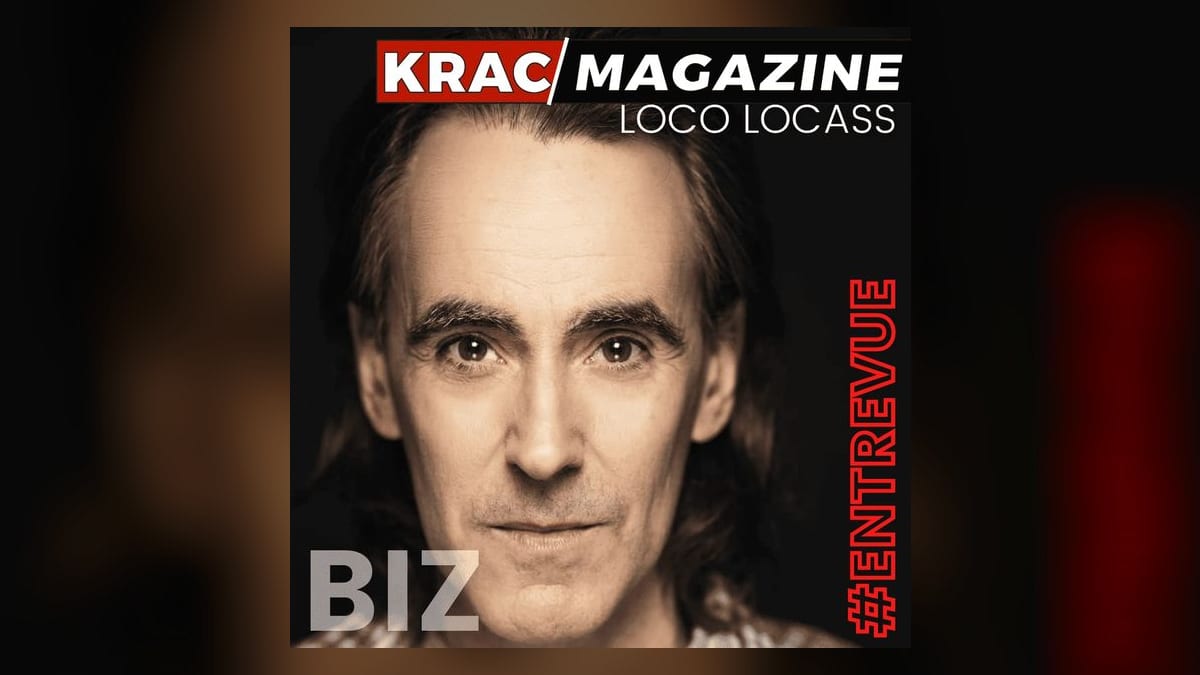
Biz, a member of the band Loco Locass, is a staunch defender of the French language and Quebec's independence. In addition to his musical career, he is a recognized author, having won several awards for his literary works.
In this interview, Biz shares his thoughts on Quebec's future, the handling of the pandemic, and the impact of recent social movements. He also talks about his love for music, his artistic influences, and his commitment to young people.
This interview was originally published on KracRadio in 2021. Interview by Sébastien Ross. Photo: Sacha Bourque.
Biz's work as an author was recognized with the Montreal Libraries' Youth Book Award and the Quebec Booksellers' Youth Award in 2012 for "La chute de Sparte" as well as the France-Quebec Prize in 2015 for "Mort-Terrain." His latest work "Les abysses" is his seventh book published with his publisher Leméac. http://www.lemeac.com/auteurs/163-biz-.htm
Language and Independence
Hello Biz, I'm very happy to have the pleasure of doing this Q&A session with you. Let's start with a light-hearted question for the master of the French language that you are: what's your favorite word in our beautiful language and why?
Biz The easy answer would be 'dictionary' because it contains them all, but that doesn't tell us much. Let's say I really like the word 'sensually' because I find it does what it says. I think the signifier and the signified meet, and it's sensual to say 'sensually,' plus we need the language to say it.
You've always been a great defender of the language and of Quebec. What do you think of Quebec in 2021? Is it still possible to become a country in this system leaning towards globalization?
Biz Yes, I think it's still possible. Gaston Miron said: 'As long as Independence isn't achieved, it remains to be done.' Is it possible? Yes! Is it probable in the near future? I don't know. I honestly don't see it. But, well, politics being what it is, there are plenty of Nostradamuses who have thrown their crystal balls in the trash. Notably by saying that, on election night, it was impossible for Donald Trump to win the election, and it happened.
Anything can happen in politics, really anything. The lesson I take from history is that you can never take anything for granted in politics, and you can never say it will never happen. Let's say in my time, when we started making music after the Referendum, the project of Independence was carried by the youth and a certain part of the older generation. Now, it's mostly the older folks, the Baby Boomers, who support that project. For the young people, at least those I hang out with because I'm lucky to have a girlfriend who's 30, and it's a blessing on all levels, including being able to meet young millennials, I notice that it's not on their agenda, it's not their primary concern, not like it was for me in the early 2000s with Loco Locass and all that, it was a central issue in my life. It's still a very important issue for me; I still think it's relevant to achieve Independence, for all sorts of reasons that are the same as what I thought before, and other reasons have been added.
I would say, however, that it's not true that young people are no longer sovereigntists. I went, a year ago before the pandemic, to a gathering of young sovereigntists, where I was the oldest, and I told them that it made me happy to be the oldest in a gathering of sovereigntists because it meant there were young people who still believed in that idea. I think, however, that what we need to do is align the concerns of young people with the relevance of Independence. For example, young people are very sensitive about ecology, so how can we call ourselves environmentalists while living in an oil-dependent Canada, a Canada whose economy is based on fossil fuels? Whereas, for an electric republic of Quebec, it would be much cleaner, not because we're better than the people in the West, it's just that we have water instead of oil on our territory.
I strongly believe in the electric republic; it's a somewhat simplistic formula but one that, for me, indicates two things. First, that we live in a true democracy because we've gotten rid of the Queen, the monarchy that's above us at all times, and also that we live in a territory where we can produce energy, I don't want to say cleaner because energy always has a cost, but let's say less dirty. We could produce trains, cars, planes with aluminum, aluminum produced with electricity, we could electrify all of Quebec and even the entire Northeast of America.
By the way, I make a parenthesis, in my next novel that I'm finishing and which will be released in the fall, the character is a literature professor who will publish a book, and that book is a dystopia, or a political utopia, that stages the Independence of Quebec in 2076, a hundred years after the election of the Parti Québécois. The Independence of Quebec is achieved by the Cree in the north who, following a coup, took possession of the dams and now supply the entire North American territory in the East with energy, so Independence is declared in Cree.
This utopia shows that Independence can happen in an unexpected way and that we must continue to try to convince, but perhaps with new arguments, new players, new faces, and new discourses.
Indeed, to achieve Independence, we need new ideas, in my opinion.
Biz Yes, and Independence isn't a new idea, but just because it's old doesn't mean it's outdated. When people say this idea is outdated, it's important to note that all those who say that are independent. I challenge any federal politician to say: 'You're right, Independence is outdated, we're going to annex Canada to the United States, it'll be simpler, and we'll stop pretending we're independent from the United States.' And if we did that, there would be a bunch of Canadians praising the merits of Independence.
Maybe we need to change strategy too, maybe we should submit the Canadian constitution, which governs us every day, to a referendum vote. It's possible that, in there, we'll find things that really don't suit us, notably the Indian Act. Following that, the question 'Do you accept this constitution or not?' If we say Yes, we sign it, and it's over, but if we say No, okay, but what do we do now? Do we create another one? Do we start something that satisfies us a bit more? A republic with regional representation? Offices for the 11 First Nations of Quebec in Parliament? All this can be considered in a republic of Quebec, but it's impossible in a Quebec that remains a province.
Pandemic and Social Movements
What do you think of the Quebec government's handling of the pandemic? And the Canadian government's handling? And the reaction of our fellow citizens?
Biz I wouldn't want to be in the position of a government right now. Besides, I would never want to be a politician, anyway, in normal times, so even less in pandemic times. Anyone who tells us that Legault and Trudeau are happy about the pandemic because they want to control us hasn't looked at their faces. It's not true that they're happy about the pandemic, it's not true that they're happy to be doing their job in this context.
Honestly, I think everyone is doing what they can, really. However, we quickly reach the limits of the federation when we realize that the Legault government, as early as March, insisted on the importance of closing the borders quickly and Ottawa took so long to do it, 'Well, buddy, you're not the master in your own house when we're there.' We see it with the purchase of vaccines, in the end, we're just teenagers in our room, it's not us who decide when we have to do the dishes, when we have to take out the trash!
Justin Trudeau has the nerve to lecture Legault on the management of CHSLDs when health transfers have been cut for 50 years, they've gone from 50% to 20%. So before lecturing on how to manage things, first take care of what belongs to you, that is, the prisoners and what falls under your federal competencies, like the Indigenous peoples, and secondly, give the money to the provinces so they can properly manage the health systems.
I'm always amazed to see Justin Trudeau begging, we're at the point of begging Canadians not to travel. For me, it's the first time I see that, a politician begging people, it's like if the police begged people not to run a red light. You know, change the law, ban flights, close the airports, that'll solve the begging, and that'll be that.
In general, in the federation, it's always the same thing. The federal government sets itself up as a kind of father figure while the provinces have the dirty job. They lack the budget to do the real work of proximity with the citizens, it's the provinces that have it, whether it's in education, health, and transportation, among others, while the federal government is always trying to make us believe it knows better how things work and that we should listen to it. For me, if we needed one more reason, this pandemic illustrates the relevance of Independence so we can manage how things work within our borders.
The pandemic took up a lot of space in 2020, but there were also other significant events. Which ones impacted you the most? And why?
Biz Over the year, from a social point of view, we can't avoid addressing the death of George Floyd in the United States and the great planetary movement that followed. There was an awareness on a Western scale that there were really problems, it's sure that in the United States, it's blatant, but I think each society must look at itself, but we must be careful not to import the problems and ideological frameworks of the USA, because we can do it like a colonized people, but we don't do things correctly when we do that. However, it's not by saying 'For us, it's not the same as in the United States' that we're exempt from an examination on this subject.
I've been doing rap for 20 years, and I have Haitian friends, African friends who get harassed more than I do by the police, and they're not nastier than me, that, that speaks to me. Friends who get denied housing because of their accent, that not only speaks to me, but it also makes me... it pains me, actually.
So, the global awareness of racism that exists, that is real, I would say, and also the fed-up of those who suffer from it, for me, it seemed evident.
This happened this summer with Black people and this fall, Mrs. Echaquan in Joliette, for Indigenous people. We discovered in Quebec, I knew it because it's a world I know a little, at least a little better than most Quebecers, but I knew that there are Indigenous people who absolutely don't want to go down to the hospital because they're afraid of not coming back, afraid also of being harassed and judged.
I met Carol Dubé, Mrs. Echaquan's widower, during the filming of a show, and I sympathized with this man, an extraordinary guy who made me feel extremely good to see how, despite everything, he can be serene, very strong, and very funny, despite what happened. He talked to me a lot, he had me autograph one of his objects, and we really hit it off together. And I was thinking: 'I'm part of the gang that killed, that harassed his wife until her last breath in the most total indignity, and the guy is 'chilling' with me, he's relaxed and he's funny. Me, let's say my girlfriend went to Toronto and died in a hospital being called a 'Frog,' I'm not sure I'd feel like 'chilling' that much with Canadians.' I learned a lot from that meeting and that discussion.
This situation is complicated because it involves jurisdiction. Technically, Quebec doesn't have a ministry of Indigenous affairs, that's a federal matter, but the health system is Quebec's, but clearly, it's not normal for people to be afraid to go to the hospital, whether it's the fear of being harassed there or the fear of losing their life there, something's not right, and we need to fix that. I think there was an awareness, on our scale in Quebec, of the same kind of resonance as George Floyd in the United States. We might be able to learn lessons from it so that these deaths, at least, weren't in vain.
Indeed, many people have opened their eyes to what people of color and Indigenous people can experience.
Biz Absolutely! I have an actor friend, a young guy who acted in the film 'La chute de Sparte' that I scripted, a great guy with whom I've kept in touch, and he told me: 'After George Floyd's death, I felt that people's gaze was different on me, in the street. I felt smiles, I felt a kind of consideration that wasn't on the same scale before.' I think there's a before and after, despite these dramatic incidents, positive things can emerge from all this.
Otherwise, all this happens for nothing, and that's when it becomes alienating, when it becomes frustrating, and when people have anger, which is legitimate, and that anger, you never know how it can come out. Collectively, when anger takes over, it leads to the storming of the Capitol, it leads to a loss of meaning, the failure of democracy when violence takes over.
That said, it's sometimes necessary. We can also look at the struggle of the F.L.Q. (Front de Libération du Québec), how it was conducted, inspired by the greatest revolutionary movements on the planet. I saw the film 'Les Rose,' and I knew some things about the October Crisis, but I saw images of the endemic poverty of French-speaking Quebecers before the Quiet Revolution, and when you see those images, you understand why people get fed up with a system that dominates them, with systemic oppression in that case that clearly applied to Quebecers and which, even in the sociodemographic indicators of the early century, was comparable to African countries in terms of longevity, infant mortality, and various indicators, so when you see that, when you remember that, you understand the F.L.Q. Today, James Cross is dead, but he was the only one who called the Felquists revolutionaries and not terrorists, maybe because he, from his position as a privileged British diplomat, knew the imperial dynamic, that he could recognize in societies when people were fed up enough and had to revolt to get out of it.
Sporting and Musical Passions
To help lift your spirits during these tougher times, especially during this pandemic period, what activities do you engage in to recharge and clear your mind?
Biz Normally, I used to play hockey in a garage league and practice karate, but right now, we can't do our sports. I moved in August, and now I live in the 'Petit Laurier,' and there's a rink two blocks from my place, so as soon as there's ice and I have half an hour to myself, I head to the rink. My son is 14 and 'zooms' all day for school, but at lunchtime, we eat quickly and go shoot some pucks for half an hour, it feels so good! You're so in the moment when you play sports, hockey in particular, it's such an amazing sport for me, I love playing hockey.
Otherwise, I'm lucky to be able to enjoy my girlfriend's cabin up north. We often go into the woods, and it's refreshing because you don't feel the confinement in the forest, there's no curfew for the owls, no anxiety. Especially in the spring, during the first lockdown in March, it affected me a lot psychologically, and when I found myself up north, in the woods, I felt it was really more relaxing, whereas in the city, there was tension because there was no one on the streets, we weren't used to it and didn't know what to do.
For sure, I'm in the process of writing a novel, so pandemic or not, I'd be sitting at home, alone, typing on my computer. I'm privileged because this pandemic affects me much less professionally, and even psychologically, than many others for whom I have a lot of sympathy. People, friends who have lost restaurants, bars, and businesses and don't know what to do, young people entering CEGEP without initiation, who have never visited their CEGEP, it's dramatic, especially for the younger ones too. I have a lot of sympathy for the stress, the frustration this episode can bring.
Personally, for me, as a writer, writing is a confinement, a solitary confinement, and we're in our heads. It also brings back the power of reading, of art in general, but reading in particular, it's an escape, you can really get out of your head, and there are no limits in literature, you can go, for example, with Isaac Asimov into the future or another galaxy, literally with reading. There's no pandemic when you're writing and reading.
Speaking of activities, you're a big fan of the Canadiens and the Patriots, who are your favorite athletes currently, and all-time favorites in these two sports?
Biz Currently, I really enjoy watching the Chiefs, but I've liked them since the '90s, especially with Laurent Duvernay-Tardif who used to lend a hand, it's fun to see a Quebecer on the line, who also studied medicine and has a good head on his shoulders, he's a great role model. Then there's Patrick Mahomes, as a quarterback, who dazzles me practically every play, he's both an iceberg and a volcano, he's alternately calm and enthusiastic when he needs to be, he's quite the general. His father was a shortstop, so he learned to throw sideways, laterally from one side or the other, with his left hand or right hand, he's part of a new generation of quarterbacks who are much more mobile, much harder to grasp, like Lamar Jackson too. Before, you'd take two or three steps out of your pocket, and it was risky, but not for them, it impresses me a lot.
In hockey, I don't understand how Connor McDavid can be so fast, it's like he's in the Matrix, everyone else is too slow around him, and those who are slow are NHL players, while he seems to be in another league. For me, who skates like I'm dragging a piano, I don't understand how he can be so fast.
As for 'all-time favorites,' it depends a lot on what you're looking at, but for me, from a perspective where sport is a socio-cultural and even political phenomenon for Quebec, it's Maurice Richard, he's a very important symbol, an athlete who carries a people with him when he's in his sport and on whom a people relies, projects itself. When Maurice scored a goal, it was more than a piece of rubber going between two posts, it was an entire people regaining a certain dignity. You know, it's important, huh, sport is important! Now, of course, people will say everything has changed, it's not the same, athletes are mercenaries and all, but still, there was a little bit of us when Laurent won the Superbowl, everyone projects onto larger-than-life models.
Sport is very simple, you win or you lose, there's no ambiguity, you scored a goal or you didn't, it makes symbols accessible to everyone that are otherwise more complex. Political struggles, social struggles, social class are sometimes more abstract, but here it becomes extremely concrete. Maurice scored, we won, Boston is eliminated, it's simple to understand and fun to watch.
I watched the movie 'Maurice Richard' with my daughter, who was about 5 years old at the time, and she understood. Maurice is fighting, and why is the referee holding him back when he's getting hit by the NY guy. He's not the best hockey player, Maurice Richard, for the best hockey player, you'd have to look at Wayne Gretzky, Mario Lemieux, Bobby Orr, those were very good hockey players, but the most significant or important athlete for Quebec, I'd go with Maurice Richard.
To be successful, do you think the Montreal Canadiens should have more Francophones?
Biz To be successful, I don't know, even though the last time the Canadiens were successful, in '93, there were 11 Francophones on the team, but it's risky to make a rule of three like that because sports don't follow those laws. However, I'd like there to be more Francophones to explain to me why the Canadiens don't win when they lose. That is, we're always told we need to choose the best players, but you chose the best, and you didn't win, so pick your group, choose your crew. I don't think Jonathan Drouin wants to be the Maurice, the standard-bearer for an entire people, but if there are 4-5 of them sharing the job, going on 'Tout le monde en parle' and different shows like that, it'll be less burdensome for each of them.
I read recently that there are only 2 Quebec goalies in the NHL right now, whereas there used to be a bunch, Quebec was a breeding ground for goalies, and for all sorts of reasons, that has changed, the Patrick Roy effect has truly disappeared. I love the Canadiens, it's my city's team, but I always connect more when it's a Quebecer who succeeds, it's sure, it's normal. For example, many black people got interested in hockey when P.K. Subban arrived in Montreal, they identified with P.K., and it's completely normal, another example, for women, there's Kim Clavel, she's not a pioneer, but they can say she's really good and motivating. It doesn't mean that I, as a white person, can't like P.K. Subban or that, as a man, I can't support Kim Clavel, but it just means that when it's someone from your group, someone who looks like you, it's normal to identify with them.
Influences and Artistic Beginnings
Let's talk a bit about your youth, did your parents frequently listen to music?
Biz In my time, it was the era of 45s and LPs, so in my youth, music was fragile, you had to be careful not to scratch the records and not to break the needle, and you had to be careful not to jump too hard when dancing because it would make the music skip. All that has disappeared, of course, nowadays. My parents listened to a lot of music, and when I was about 7 or 8 years old, they bought a very large sound system, they invested $2000, which was a big amount back then, so we had the Cadillac of sound systems accompanied by a bunch of vinyls like Dire Straits, Michael Jackson, Culture Club, basically all the music from the '80s, but my parents also listened to French music records, like Léo Ferré among others, that was pretty much what played.
Did that influence you? Is that what pushed you towards a musical/artistic career?
Biz Of course, everything that happens in our childhood influences us. My parents also listened to a lot of folk music, like 'Le rêve du diable' or things like that, and surely that also influenced me, I'd need to do a psychoanalysis to really determine the influence, but yes, surely it influenced me. My parents were teachers, and my father was a literature teacher at CEGEP, that also had an influence on me, for language and everything, an influence from both my parents but particularly from my father.
Can you share a fond memory related to music, your parents, and you?
Biz I remember a very vivid memory, I don't exactly remember how old I was, but it was the year Dire Straits' 'Brothers in Arms' album was released (Editor's note: 'Brothers in Arms' was released on May 1, 1985, so Biz was 12 or 13 years old), I'm lying in my room, my parents are having a party with lots of friends who wore beards, ponchos, and everyone was smoking. So, the song 'Sultans of Swing' is playing, I get up to go to the bathroom or something, and all this gives me a memory of gentlemen and ladies having fun, the living room is full of smoke, but what kind of smoke I never knew. As soon as I hear that song again, it always gives me a very, very vivid memory, I'm instantly teleported back to my childhood, exactly like Proust's madeleine, except in my case, it's not gustatory, it's auditory.
Lorsque tu étais enfant, quel album a été le tout premier que tu as acheté/reçu?
Biz I'll always remember the very first album I bought, it was a vinyl, a 33 RPM, and it was 'Piece of Mind' by Iron Maiden. I had saved up my 'cash', I didn't even know if the music was good but the cover really spoke to me. I listened to that vinyl excessively often on my parents' good sound system.
On dit que la musique est souvent une thérapie pour bien des gens, lors de ton adolescence, est-ce que cela t’a souvent permis de te sauver? de t’évader?
Biz Yes, it was really, really important. Music says it all! You hit 'Play' and it tells the world how you feel. You listen to Bob Marley, so things are good, you listen to Metallica, so maybe you're a bit pissed off. When you're a teen, at least for me, I had this kind of inner rage that I didn't know where it came from or how to let it out, but 'Metal' really helped me with that and I also started playing drums in 10th grade, so it was purely physical, a physical frustration... The harder I hit, the better it felt, the more noise it made...
My mom was the minister of culture in our family and she would buy my brother and me all the tickets for the shows we wanted to see, so I went to see Metallica, etc... At one point, my mom said: 'There's a guy with glasses playing piano at 'Petit Champlain' and I'm buying you the ticket' because the minister had the right to make grants but there were also ministerial prescriptions, so in those cases, I was kind of obliged to go but none of my friends wanted to come with me because it wasn't very cool in 11th grade to see a guy with glasses playing piano and in the end, it was Richard Desjardins, the author of 'Tu m'aimes-tu'. That show blew my mind because I was like 'OK, you can do that with words', 'That can be a song' and that influenced me for rap.
With Richard Desjardins, the question of language level, it's undeniably Québécois, clearly, but he uses Latin words and even, sometimes, ancient references, very elaborate words or old anglicisms from miners in Rouyn-Noranda. He navigates the language, he can talk about love, about everything and nothing... The most beautiful love songs, he wrote them and the greatest protest song, 'Les Yankees', he wrote that too. All of this coexists in a perfectly coherent way and that also influenced me a lot.
La composition est un art, as-tu débuté à un jeune âge? Est-ce que tu as commencé en griffonnant sur des bouts de papier?
Biz I talked about Richard Desjardins' show, it planted a seed in my desire to compose but it started to grow later. Of course, I already had the urge to write because, at 8 years old, I made a little book about dinosaurs, and during my first year of high school, I was composing pseudo-Baudelairian poems and in 9th grade, I wrote a bad medieval fantasy novel, so I've been writing for a very long time but composing for rap started in 1995 with Batlam in Quebec City.
Batlam came to my place, between Christmas and New Year's, with a text he had written. We listened to a lot of American rap as well as MC Solaar, who convinced us that we could do rap in French and in a literary way like him because MC Solaar has a lot of literary references. Batlam and I, who were literary types, men of letters, realized that we didn't have to have a 'gun' and sell drugs to do rap, rap can allow us to say something else, to talk about something else, to talk about who we are, in fact, and what interests us. So that's what we quickly did, Batlam showed me his text, I added a few things and we started like that.
Si tu compares la musique entre les différentes décennies, quelle est la plus authentique à ton avis?
Biz I think they're all authentic in the sense that music represents the era, it embodies the era in which it was created, so in that sense, it's authentic. If music doesn't seem authentic to us, it's maybe because the era itself isn't.
Of course, the 70s were big years when we think of Rock, there were beautiful things, we've talked a lot about it and it's been mythologized but, for me, from a qualitative point of view, the 90s is the period that interested me the most musically. When Nirvana came out with 'Smells like teen spirit', they blew up 'Glam metal', you couldn't do metal with spandex, 'Spray-Net' and lipstick like Motley Crue did, it was just not possible anymore, Nirvana put an end to that. I wasn't a big fan of Nirvana, I didn't listen to their music but I had a lot of respect for everything they embodied and I understood why so many people loved it. There were other names that made their mark in those years too, like Pearl Jam and, here in Quebec, Jean Leloup, Les Colocs, Les Vilains Pingouins... Whereas the 80s for me were weaker musically and creatively.
There was also 90s rap and, as someone who loved rap, it was very creative, very solid what was being done in those years.
Loco Locass and Musical Future
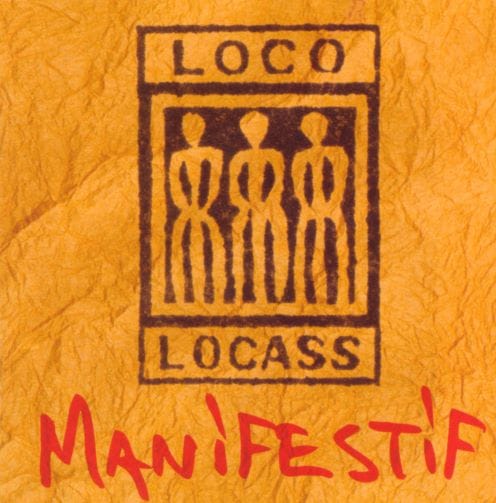
Depuis Manifestif paru en 2000, que j’ai acheté sur un coin de rue à Montréal (et, si je me souviens bien, de l’un d’entre vous directement), il y a eu un long chemin parcouru avec Loco Locass. Qu’advient-il du groupe dans le futur proche et/ou plus ou moins lointain?
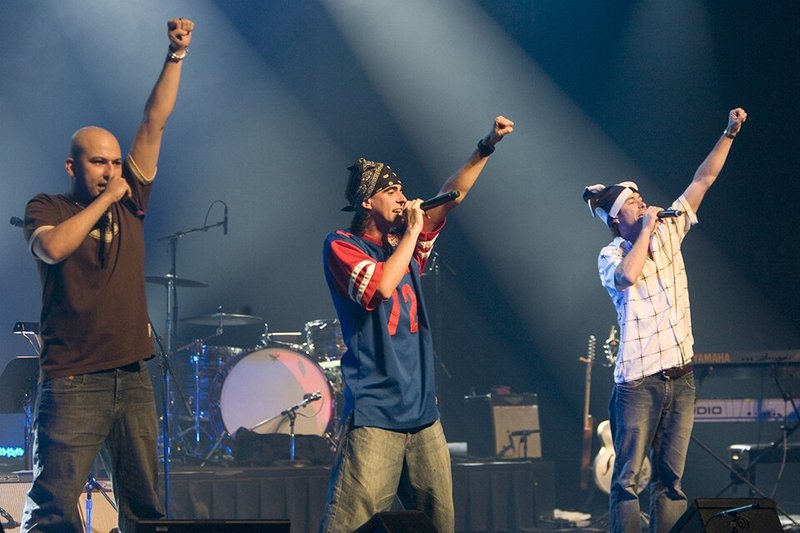
Biz The short answer is nothing because, as far as I'm concerned, I consider us retired as a music group. Also because, on one hand, we don't have any new songs in the works and, because, I have no intention of making another album or another song.
However, yes I say I have no intention but I would never say 'Never say never' because, when we released our last track 'Le Clan' in 2016, I was coming back from a promotional trip in Europe to talk about one of my books, I was coming back and I considered myself a writer but I opened my email box and there were Batlam's verses and Chafiik's 'beat' and I said: 'Oh! What's this? A new 'flow', a new sound, new words, I emailed Batlam and asked 'Hey, is there a 'Sixteen bars' available on the track because I feel like participating'. I spat out my verse in about half an hour, it was really quick and, afterwards, we worked on that track the same way we worked on our tracks on 'Manifestif', that is, the three of us together in the studio rolling the beat and intervening on each other's text. Batlam also wrote another verse during that time in the studio. So, even at that moment, I had more or less pulled the plug but another song came along but, ONE song, not an album.
You know, rap has changed a lot. My fourteen-year-old son listens to a lot of American rap and he's the one who keeps me updated on what's happening now. As for Quebec rap, it has solidified, there are a lot of players and there's a movement now that is real, which more or less existed in our time. So, I would find it hard to see how we could come back to do rap, at our age and with what rap has become, without looking like old guys rambling in a certain way. Because if we continue to do what we did before, we don't evolve and we're stuck in the past but if we try to do what's being done now, we look like old guys putting on a backwards cap and wearing jeans at the knees to greet the young ones so, either way, it doesn't work. Anyway, I'm speaking for myself, not for Batlam and Chafiik, my creative urge doesn't come out in rap, it comes out in screenwriting, it comes out in prose. Before, as soon as I turned on the tap, it was exclusively rap that came out, now when I turn on the tap, it's prose, literature that flows.
Malgré ta ‘’retraite’’ de Loco Locass, est-ce que tu as un style musical que tu aimerais éventuellement explorer, seul ou avec d’autres artistes?
Biz No, because once you've tasted the pleasure of building sandcastles by the sea, it's hard to go back to making them in a sandbox. That's my comparison between literature and rap, once you can tell your story over 300 pages, it's hard to go back to 3 minutes.
In the end, I think rap in my life, I'm not at the point of making assessments but that's what I can see when I look back, it will have been a parenthesis in my life, a long and rich parenthesis. When I say that, I'm not minimizing or denigrating that parenthesis at all, but it's an accident for someone like me. I wasn't a musician, I wasn't a melodist, I loved music but I didn't understand it, even today, I would never consider myself a singer, I can't sing, I'm not good, I don't have the breath and I can't hold a note properly whereas with rap, it was perfect! I'm not a singer but I have things to say and I have rhythm but what there was in rap, it was a writing job. With rap, there are so many words that you can write more than when you write rock, for example. That's why we came to rap in a certain way, we listened to a lot of it and we had things to say, we could have done theater too, we could have done many other things but that's it.
Personally, I dedicated twenty years of my life to rap full-time, at least at the beginning certainly full-time, and I regret absolutely nothing of what we did with Loco Locass, nothing but I've moved on like a painter who has a blue period, for example, and then moves on to something else quite simply.
You mentioned that it's now your son who tells you what's happening in the rap scene, but what do you think of the emerging Hip Hop/Rap music in Quebec and its place in the world?
Biz I watch it from a distance, like an uncle watching his nephews and their friends have fun, with goodwill. There are good things, on a formal level, I would say, that's what I find interesting. With social media, the way people present themselves, market themselves, I find there's a lot of creativity, especially during the pandemic. I think of Fouki, among others, there are several who made albums. If we were 25 during the pandemic, Loco Locass would certainly have released something, maybe not an album because we composed slowly, but we would have worked, that's for sure.
Besides hockey, music, and literature, do you have another great passion? If so, what is it?
Biz Before the pandemic, there was karate, which was good for my body and mind, and I can't wait to start again. But I also really love cinema, both watching and writing scripts. I really like visual arts, I'm very interested in painting. I've never been good at drawing, but painting interests me. It's like when you're not good at something, it's impressive to see the talent of those who excel at it. It's the same with hockey; I play, but I'm not good, and when I see someone who's really good, it amazes me.
In literature, not to say I'm good at it, but you have to get up pretty early to impress me, I'm talking about style. I'm very picky about style when it comes to literature. You can tell me a beautiful story, but if you don't have style, I'm not going to listen. To put it simply, style in literature is like a comedian's style. Louis-José Houde could read the phone book, and you'd be laughing your pants off. There's nothing interesting in a phone book, but he has his style, his rhythm, his delivery, his expressions. That's style, and it's the same in literature. It's not what you tell me that interests me; it's how you tell me.
You've always been involved with young people, whether in youth camps, the youth depicted in your novels, and I also think of the video and song 'M’accrocher' by Loco Locass, which is a message about the pain and distress of our youth. What have you tried to bring to them through your experiences with them?
Biz Of course, my relationship with youth has evolved as I've gotten older because, at first, I was young myself, and youth is relative. For example, for my 14-year-old son, who's young, his 10-year-old sister is the one who's young. At first, the young people at Loco Locass shows were my age, so we were with them, among them, and what I tried to bring them was nothing other than myself, hoping it would touch them and that they would feel engaged by what I had to say.
In summer camps, parents entrust us with what they hold most dear. We were in the woods, and we had to keep them entertained; it was thrilling. When it rained, you'd take out a rock, a stick, and you had to invent a game, always in creative mode. It's not so much what I could bring them as what I learned from the experience. I worked there in my first year of CEGEP. I was rather misanthropic as a person at the end of high school, beginning of CEGEP, and after a summer at camp, I became a humanist. Being around young people and other counselors, people my age, opened me up to generosity, to others. You don't count your hours of sleep when you have kindergartners, and if one is scared in the middle of the night, you get up and help them. It allows you to step outside yourself, to think of others.
Now, I have children myself, and it's a different relationship because there's a question of authority. But for young people in general, I always try to stay curious about what interests them, what excites them, why they talk like that, and why they're interested in certain things, for example. I try to understand them instead of judging them, but I would say the more you age away from them, the harder it is to understand them. The bigger the generational gap, the more we tend to judge each other, which isn't always a good thing. We're better off with empathy than judgment.
When you're part of a generation, you have a kind of class solidarity, but you don't realize it. Like back in the day with Loco Locass, it was 'Libérez-nous des libéraux,' we were right, period, and those who disagreed with us were out of touch. As you get older, there's a bit more nuance, and that's what I liked when, in 2012, we supported the young people in their strike, even though it wasn't my strike. I hadn't been in university for 20 years, but I had fun being with them and supporting them in their fight. I found them creative, energetic, and not jaded. Those were beautiful moments of fraternity with the young. I think when you hang out with youth, you age slower, you become less of a fool.
Social Media and Technology
You mentioned social media earlier, what's your relationship with social media?
Biz I'm not really sure, actually. I've got one foot out and the other in. In fact, my girlfriend always scolds me about my Instagram account; she thinks it's completely lame. I have one, but I only have 1,200 followers, I don't post much, and I've never been on Facebook. For me, it's more about Twitter. I signed up in 2012, exactly during the student strike. At first, it was to promote our album that was coming out, and eventually, during that strike, it was very useful and interesting to be on Twitter.
What I like are words, little aphorisms, little reflections, and Instagram is more about photos. And photos, like photographing my salad, interest me less. But that said, I don't judge, or much less since I've been with my girlfriend, those who do it. There's a form of aesthetics in it, even a form of dandyism. Baudelaire's Instagram account might have had 'stories' with paintings by Eugène Delacroix, hashish toast, and dandies with top hats. I don't judge those who are on it, but there's something a bit vain about it. I'd rather work on a novel than work on a tweet.
At the same time, I say that, but you can always convert your social media followers. My girlfriend has quite a few followers, and sometimes she receives gifts, stuff. It's like a horse; it depends on who's riding it, what you do with it. But I remain a bit skeptical. I really appreciate the real, the true, real contacts. I find there's a dark side to social media, so when you connect people who aren't doing well, it also leads to things like the Capitol invasion.
Right now, there are too many people with nothing to do and who are unhappy. We need to address that. People need to start working again, going out to bars, getting smashed with their friends, going outside, seeing people. We're not made for the life we're leading right now, and we realize it, and social media exacerbates that. We have to be careful, so sometimes I try to take a little break myself.
Since the 60s, technology has regularly made great leaps in various spheres of our society. Does that scare you or excite you?
Biz I would tend to say that whatever happens from a technological standpoint, we must not lose sight of the fact that the essence of humanity is still human contact. I don't think we could succeed in embodying humanity by each being in our apartment, connected to computers. I don't think that's the goal of the human species; I don't think it's made for that unless we evolve, our brains evolve over millions of years, a bit like Houellebecq thought in 'La possibilité d’une île.'
There are still really fun things with phones. For example, I don't have a car in Montreal, but I can unlock a 'Communauto' remotely with my phone. My smoke detector is connected to my cell phone, and if I'm not home and my son is cooking noodles and it starts ringing, I'll know immediately thanks to my phone... There are great things with technology. I wouldn't go back to living in the Middle Ages, definitely not. But as I said, we need to return to basic hockey, and basic hockey is having fun with our friends, getting excited, accomplishing, realizing ourselves in meaningful projects, and ultimately, since we're in society, we can't ignore others.
I'm always fascinated by how mean we can be, how we can say or write things with a meanness, a violence we would never do. When I was in Loco Locass, I had a file where I archived the death threats I received, and there was no Twitter and others at the time; it was just emails. If we had done everything we did the same way, with all the social networks today, we would have probably received a lot more. I thought at some point, I was going to get beaten up, literally attacked, but it never happened. I never had bad experiences in the real world, not even someone coming up to me saying, 'You're a jerk, I love the liberals, I'm going to punch you in the face!' But on the internet, it happened regularly. How can you send that into the universe or to someone, knowing you'd never say it to their face? It baffles me, this either unconsciousness, cowardice, or pure meanness...
What I like are words, little aphorisms, little reflections, and Instagram is more about photos. And photos, like photographing my salad, interest me less. But that said, I don't judge, or much less since I've been with my girlfriend, those who do it. There's a form of aesthetics in it, even a form of dandyism. Baudelaire's Instagram account might have had 'stories' with paintings by Eugène Delacroix, hashish toast, and dandies with top hats. I don't judge those who are on it, but there's something a bit vain about it. I'd rather work on a novel than work on a tweet.
At the same time, I say that, but you can always convert your social media followers. My girlfriend has quite a few followers, and sometimes she receives gifts, stuff. It's like a horse; it depends on who's riding it, what you do with it. But I remain a bit skeptical. I really appreciate the real, the true, real contacts. I find there's a dark side to social media, so when you connect people who aren't doing well, it also leads to things like the Capitol invasion.
Right now, there are too many people with nothing to do and who are unhappy. We need to address that. People need to start working again, going out to bars, getting smashed with their friends, going outside, seeing people. We're not made for the life we're leading right now, and we realize it, and social media exacerbates that. We have to be careful, so sometimes I try to take a little break myself.
Music Economy
Regarding the current relationship between the media and artists, do you think the support has been sufficient in recent years?
Biz I find that with social media, artists have taken control of their own marketing. There are fewer and fewer intermediaries between fans and artists, and that's a good thing. Now, the economic model of music is not in favor of artists, absolutely not. Everyone gives away their music, which is nonsense from an economic standpoint. But everyone does it, and I don't blame young people for doing it because music has become a business card to invite people to shows and buy T-shirts; it's become like that. The decline of traditional media is accompanied by a rise in promo using social media by artists. It requires more and more time, and it's very demanding to interact directly with fans because, the slightest thing you do (for example: 'Hey, six months ago in Val D'or, I said hi, and you didn't respond'), fans feel like they own you or that you owe them something emotionally. Like me, yes, I owe my fans something artistically, certainly, but I don't owe them anything personally because I don't expose anything of my personal life, or at least very little.
And for the poor traditional media, when even 'La Presse' struggles to make ends meet, we can't expect there to be very critical journalists doing the job. What's going to happen is that influencers will beg for show tickets, and there will be artists who will give tickets in exchange for a good word on Twitter or a photo on Instagram. We're no longer in the realm of critique, Critique, that kind of critical work no longer exists in Quebec.
As you mention that artists now give their music away for free, do you think the compensation from digital music services like Spotify is high enough in relation to the number of plays?
Biz Oh no, definitely not! Compared to the profits it generates, it's clearly insufficient! If Spotify said, "Look, we're just breaking even, we can't really pay more than this." Okay, maybe, but it's just that it's a model that's almost based on exploiting workers. The workforce, to speak like Marx, are the ones who benefit the least from the economic activity generated by this workforce, which is quite inconceivable. How is it that major internet providers don't give back more to artists, considering it's these artists who provide the content?
There's also another problem because now, any guy who plays guitar or covers songs and goes viral can generate millions of clicks and thus lots of money. It's not even just the real artists who generate 'Clicks' anymore; it's open to pretty much everyone now. That said, when your song, like Pharrell Williams' "Happy," gets a lot of play and generates ten thousand bucks for millions of views and listens on various platforms, someone is pocketing too much, and someone isn't getting enough. The pie is what it is, but it's very poorly divided.
Thank you for all the time you've given me, but before we part, here's a bonus question from a fan, Roxanne Trépanier, who wants to know if the song and video "Secondaire" are based on a true story?
Biz Unfortunately yes, unfortunately for Chafiik and me, it was pretty autobiographical. Pants down on the first day, that's what happened. At the time, of course, it's a drama, you want to change schools and all, but with time, we laugh about it, have fun with it, and make a song out of it!
That's great, it's a beautiful life experience!
Biz The beauty of art! What to do with manure? Well, grow flowers on it! (Laughs) That will be the final word, Manure! In the sense of, This joint, you should have 'Manured' it to the end! (Laughs)
To discover more captivating discussions with Quebec artists and thinkers, stay tuned to KracRadio.
Questions and answers
What awards has Biz won for his books?
Biz won the Montreal Libraries Youth Book Award and the Quebec Booksellers' Youth Award in 2012 for 'La chute de Sparte', as well as the France-Quebec Award in 2015 for 'Mort-Terrain'.
What is Biz's favorite word in French?
Biz loves the word 'sensuellement' because he finds that the signifier and the signified meet in a sensual way.
What is Biz's position on Quebec's independence?
Biz believes that Quebec's independence is still possible, although he is not certain of its likelihood in the near future.
By Sébastien Ross, Founder of KracRadio
Our editorial policy →Newsletter · once a week
This week’s shows and what’s new, every Monday at 11 a.m.
One email a week, Monday at 11 a.m. (Montreal time): the shows of the next 7 days (time to get your tickets), what’s new on KracRadio, new artists in the Wiki and articles to read. One-click unsubscribe.